2022 Annual Report Index
  • Facebook
  • Twitter
  • Instagram
  • Letter From Our Leadership
  • Ukraine Emergency
  • 2022 at a Glance
  • Our Guiding Principles
    • Our Vision
    • Our Mission
    • Our Staff
    • Our Values
    • Our Strategic Framework
  • Investing In Impact
    • Help
    • Hope
    • Home
  • Our Donors
  • 2022 Financial Report
  • Our Board

Help Refugee Families

As a donor, you’ll become one of our most valued partners, and you’ll know that every day you are helping to bring hope, comfort and support to the world’s most vulnerable people.

Donate Now
Investing In Impact For Refugees Help
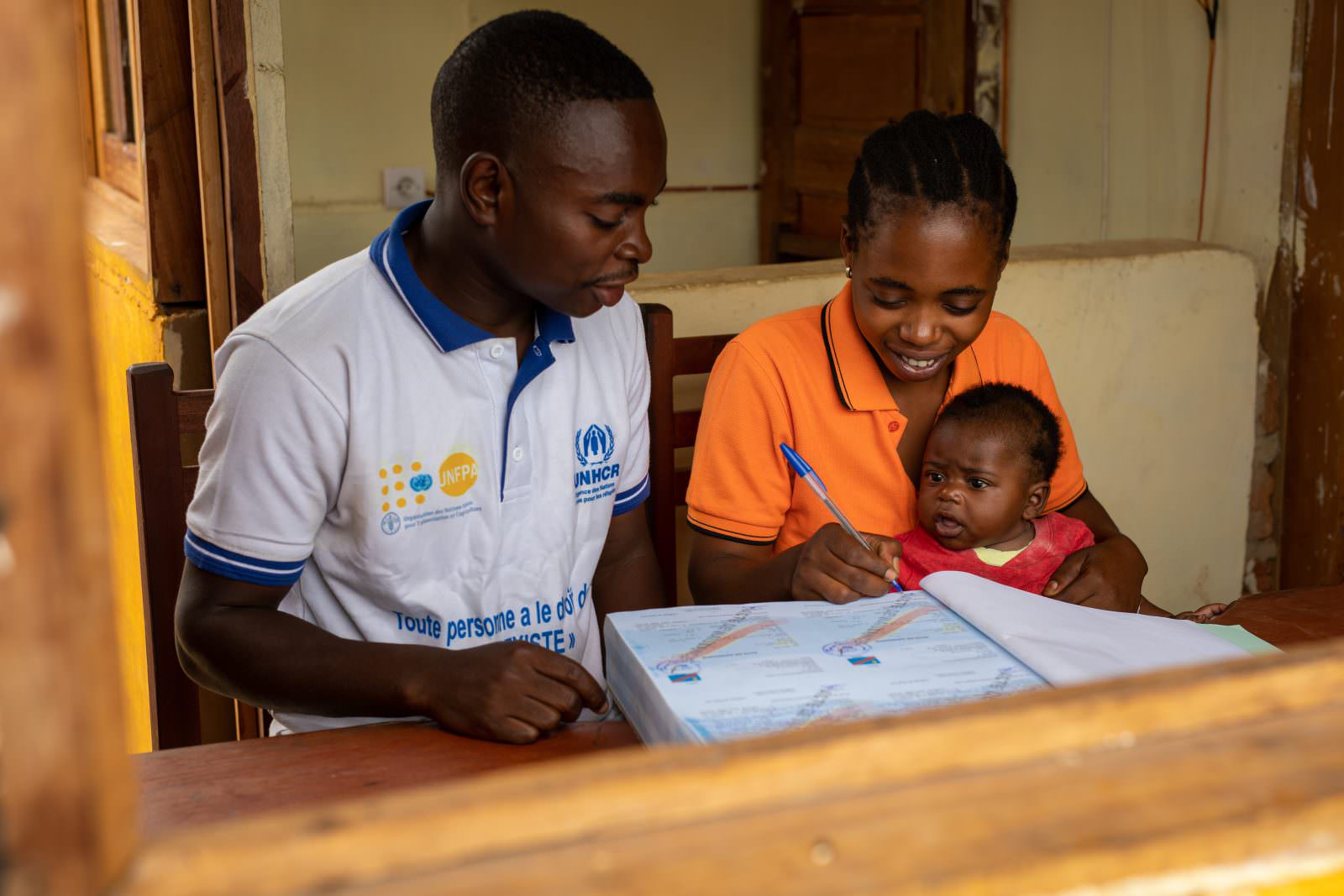
On November 13, 2021, Raphaël Yuse, Civil Registry officer, registers the birth of Léon Kabengele, 3 months old, in Tabac-Congo, a village situated 25km north of Kalémie, in the province of Tanganyika, east of the Democratic Republic of the Congo. ; In the Tanganyika province, it is estimated that only 35% of births are registered in the Civil Registry. The main reason is the distance from the Civil Status offices: on average, a person has to travel 120km to register the birth of a newborn. In the Democratic Republic of the Congo, parents have 90 days to register the birth of their child. After this deadline, only a supplementary judgment allows registration. As parents often do not have the financial means to pay for the legal procedure, the majority of children grow up without civil documents and are not recognized by the Congolese state. To promote an increase in the registration rate in remote localities and help reduce the risk of statelessness, UNHCR supports the Tanganyika authorities by providing means of transport, motorcycles and bicycles, and proxy books, called village notebook, which allows civil status officers to register births directly in the villages, thus preventing mothers from traveling. © UNHCR/Gwenn Dubourthoumieu

Machine Learning Enhances Legal Assistance for Refugees

In early 2019, UNHCR’s Division of International Protection embarked on a project to use machine learning to automate manual annotations of legal documents in Refworld. Refworld is UNHCR’s public database of case laws and other legal documents — a vital resource for legal aid workers, lawyers, judges, and UNHCR staff who rely on it for their legal research. These annotations enhance navigation and searchability between documents to assist in building legal arguments for asylum-seekers and people of concern.

With a $50K grant from Splunk Inc. in 2022, The Hive, the innovation lab at USA for UNHCR, conducted a feasibility study for automating the extraction of case law citations from legal documents. Machine learning was used to identify case law entities within the documents to improve the website’s user navigation experience.

Help Refugee Families

As a donor, you’ll become one of our most valued partners, and you’ll know that every day you are helping to bring hope, comfort and support to the world’s most vulnerable people.

Donate Now
  • Facebook
  • Twitter
  • Instagram

© 2025 USA for UNHCR